Navajo Nation at a Glance
Across a landscape of red rock mesas, high desert grassland, and forested mountains, the Navajo Nation is home to the Diné — "The People" — a sovereign nation with its own government, laws, language, and living traditions. This page is written as a cultural introduction rather than a typical travel guide, in the hope that understanding the Diné and their homeland will shape how visitors experience Northern Arizona more broadly. Before learning more about the Diné and their homeland, here's the Navajo Nation at a glance:
Largest Reservation in the U.S.
By land area and population
Arizona, New Mexico & Utah
Spanning three states
Home of the Diné
The Navajo people
A Sovereign Nation
With its own government
Rich Cultural Traditions
Language, art, and ceremony
Diverse Landscapes
Desert, canyon, and mountain
Millions of Protected Acres
Traditional homeland
Who Are the Diné?
The Meaning of "Diné"
Many Navajo people refer to themselves as Diné, a word that translates simply and powerfully as "The People." While "Navajo" is the name most widely used in English and in most historical records — believed to derive from a Spanish adaptation of a Pueblo word — Diné is the name the people have long used for themselves, carrying a sense of identity and belonging that predates outside naming entirely. Many formal and official contexts today use both names side by side, reflecting a history in which an outside name became widely adopted alongside the community's own name for itself.
A Living Culture
Diné culture is not a historical artifact; it is a living, continuing way of life. Language, family, and community remain central to daily experience, passed down through generations in homes, ceremonies, and everyday interaction. Traditions around respect — for elders, for family, for community obligation — continue to shape how people relate to one another. Clan relationships remain especially significant: traditionally, Diné introduce themselves by their four clans, tracing lineage through both maternal and paternal lines, a practice that continues to shape identity and social relationships today.
At the same time, modern Navajo life is thoroughly contemporary: Diné today work as educators, engineers, artists, business owners, and elected officials, carrying their culture forward while fully participating in modern life, not choosing between the two. It's a mistake, common among outside visitors, to expect traditional dress or ceremony as a marker of "authentic" Navajo life; the truth is that contemporary and traditional Diné life exist together, seamlessly, in the same communities and often the same individuals.
Connection to the Land
For the Diné, land is not simply scenery or real estate; it is deeply tied to identity, spirituality, and responsibility. Traditional belief describes the homeland as bounded by four sacred mountains, each holding specific spiritual significance, with the space between them understood as the world in which the Diné were meant to live according to traditional teachings. Certain mountains, mesas, and landmarks hold sacred significance within traditional belief systems, marking the boundaries of the traditional homeland and carrying meaning far beyond their physical beauty.
This relationship comes with an ethic of stewardship — a responsibility to care for the land, not simply use it — that continues to inform traditional values and, increasingly, modern environmental and land-use policy across the Navajo Nation. That stewardship ethic extends to how the Diné traditionally understand their place within a broader natural order, one requiring maintenance and care rather than passive enjoyment.
A Brief History of the Navajo Nation
Early History
The Diné have lived across the Four Corners region for many centuries, developing a way of life adapted to a demanding, beautiful, and varied landscape. Long before outside contact, Diné communities were already farming, herding, and building a rich oral tradition and social structure across their traditional homeland, a region bounded, in traditional belief, by four sacred mountains. Historians and archaeologists generally trace Diné presence in the region back several centuries before European contact, though Diné oral tradition describes a much deeper, continuous relationship with this land, understood through origin stories rather than archaeological dating alone.
Spanish, and later Mexican and American, contact and settlement brought centuries of shifting and often difficult relationships between the Diné and outside powers, including periods of conflict, raiding, and negotiation on multiple sides. Sheep, introduced during the Spanish colonial period, became deeply integrated into Diné life, reshaping both the economy and, eventually, artistic traditions like weaving that depended on wool.
Traditional Homeland
That traditional homeland, known as Dinétah, extended across a wide territory later divided by state and federal borders that meant nothing to the people who had lived there for generations. Understanding this history requires recognizing that the boundaries familiar today are relatively recent lines drawn across a homeland with a much older, continuous human presence. The current reservation, even at its expanded modern size, represents only a portion of the land traditionally described within Dinétah.
The Long Walk
One of the most significant and painful chapters in Navajo history took place in 1864, when the United States military forced thousands of Diné to leave their homeland and march roughly 300 miles to Fort Sumner, New Mexico, in an event known as the Long Walk. The march followed a deliberate campaign to destroy Navajo crops, orchards, and livestock in order to force surrender. Many people died during the march itself, and several thousand more died over the following four years of internment at Bosque Redondo, due to disease, inadequate food and water, and conditions unsuited to the scale of the population confined there. This period represents a profound injustice in Navajo history, and it is remembered accordingly — as a defining, deeply consequential event, not a minor historical footnote.
The Treaty of 1868
In 1868, a treaty signed at Fort Sumner allowed the Diné to return to a portion of their ancestral homeland, establishing the original Navajo reservation and marking the beginning of the modern Navajo Nation. It was a rare outcome for the era — most tribes forcibly removed from their homelands during this period were never permitted to return. The reservation established in 1868 has since been expanded multiple times to reach its current size, though it remains only a portion of the traditional homeland described in Diné tradition.
The Navajo Nation Today
Today, the Navajo Nation operates its own government, including an elected president and a tribal council, alongside its own court system, police department, and public services. Modern life spans education, business, arts, and community governance, all continuing alongside efforts to preserve language and cultural tradition. The Long Walk and its aftermath remain part of a story that continues into an active, self-governing present, not a closed chapter of loss alone.
Understanding Navajo Values
Rather than reduce Diné culture to landmarks or crafts, it's worth pausing on the values that shape daily life and continue to guide the Navajo Nation as a community:
- Respect for Family — extended family and clan relationships remain central to Diné identity, shaping obligation, support, and belonging.
- Respect for Elders — elders are regarded as carriers of knowledge, language, and tradition, and their guidance continues to hold real weight in community life.
- Stewardship of the Land — land is held as a responsibility, not simply a resource, tied to identity and long-term care rather than short-term use.
- Community — individual wellbeing is understood as connected to the wellbeing of family and community, not separate from it.
- Balance and Harmony — often expressed through the concept of hózhó, a foundational idea in Diné thought describing a state of beauty, order, and balance to be maintained in one's life and surroundings.
- Connection to Nature — the natural world is understood as alive and significant, not a passive backdrop, reflected in traditional stories, ceremonies, and daily practice alike.
These values aren't abstract ideals reserved for ceremony; they shape everyday decisions, relationships, and ways of understanding one's place in the world — a meaningful foundation for understanding Diné culture, rather than a simplified summary of it.
The Navajo Language
Diné bizaad, the Navajo language, is one of the most widely spoken Indigenous languages in the United States, and its preservation remains a significant priority for the Navajo Nation. The language is famously complex, with a verb structure and tonal qualities that make it exceptionally difficult for non-speakers to learn — a complexity that became historically significant during World War II, when Navajo Code Talkers used the unwritten language to create a code that was never broken by opposing forces, contributing directly to Allied victories in the Pacific, including pivotal battles such as Iwo Jima.
The Code Talkers program itself remained classified for more than two decades after the war ended, meaning many of the Diné Marines who served in this capacity received public recognition for their contribution only decades later. Today, their legacy is a source of significant pride within the Navajo Nation and is commemorated through memorials, museum exhibits, and continued public recognition, alongside a broader wartime service record that also included many Diné serving in more conventional combat roles.
Beyond its wartime significance, the Navajo language remains deeply tied to cultural identity, ceremony, and daily life. Language immersion programs and Navajo-language education efforts continue across the Nation today, reflecting a recognition that language carries far more than vocabulary — it carries worldview, relationship, and continuity between generations. Like many Indigenous languages, Navajo faces real challenges in the number of fluent speakers, particularly among younger generations, which is exactly why active preservation efforts remain such a priority for the Nation today. Radio programming, digital resources, and Navajo-language curriculum in tribal schools all form part of a broader, sustained effort to keep the language a living part of daily life rather than a subject studied only in the abstract.
Arts, Crafts, and Traditions
Diné artistic traditions carry cultural and historical significance well beyond their beauty, and are best understood as living expressions of culture rather than simply souvenirs.
Weaving: Navajo weaving, particularly rug weaving, is a highly developed art form with distinct regional styles and patterns, historically significant both within Diné communities and in wider Southwestern trade. Skilled weavers pass down techniques across generations, and a well-made Navajo rug represents many hours of specialized, inherited skill, from shearing and spinning wool to dyeing and the weaving process itself, often using upright looms built and used the traditional way.
Jewelry and Silversmithing: Navajo silverwork, often paired with turquoise, developed into a distinctive art form beginning in the 1800s, after Diné artisans learned silversmithing techniques and adapted them into a style entirely their own. It remains one of the most recognized Native American art traditions in the country, practiced today by generations of skilled Diné silversmiths, ranging from traditional designs to contemporary interpretations sold well beyond the Southwest.
Ceremonial Traditions: Ceremonies play a central role in Diné spiritual and community life, including healing ceremonies that may involve sandpainting created for that specific ceremonial purpose, then ritually destroyed afterward rather than preserved as art. These traditions are sacred and often private, not created or intended for public display or casual reproduction, and commercial sandpainting "art" sold to tourists is a distinct, secular tradition, separate from the ceremonial originals.
Storytelling: Oral tradition remains a vital way that history, values, and teachings are passed between generations, carrying knowledge that extends well beyond what has been formally written down. Traditional stories often carry layered meaning, teaching practical lessons and cultural values alongside their surface narrative, and certain stories are traditionally shared only at specific times of year.
Landscapes of the Navajo Nation
The Navajo Nation's landscapes are inseparable from Diné identity and history, each carrying its own significance beyond scenic value.
Monument Valley: Perhaps the most internationally recognized landscape on the Navajo Nation, its towering sandstone buttes rise from the valley floor along the Arizona-Utah border. Monument Valley is managed as a Navajo Tribal Park, and many Diné families continue to live within the valley today, herding livestock and maintaining a way of life connected directly to this land, not simply performing it for visitors.
Canyon de Chelly: A deep sandstone canyon that has been continuously inhabited for centuries, home to ancient dwellings alongside Diné families who farm the canyon floor today. Unlike most National Park Service units, the land within Canyon de Chelly remains owned by the Navajo Nation and its residents, meaning visitors can only enter the canyon floor accompanied by an authorized Navajo guide or resident, a structure that reflects genuine, ongoing land ownership rather than simple park regulation.
Antelope Canyon: Carved into Navajo sandstone near Page, this glowing slot canyon is located entirely on Navajo land and managed under Navajo Nation authority, accessible only through guided tours led by Navajo guides.
Horseshoe Bend: A dramatic curve of the Colorado River located near, though not within, the Navajo Nation, part of the wider landscape that surrounds and connects to Diné homeland.
The Little Colorado River Gorge: A striking, lesser-known canyon on Navajo land along the route between Cameron and the Grand Canyon, offering a dramatic reminder of how much remarkable landscape lies within the Nation beyond its most famous sites.
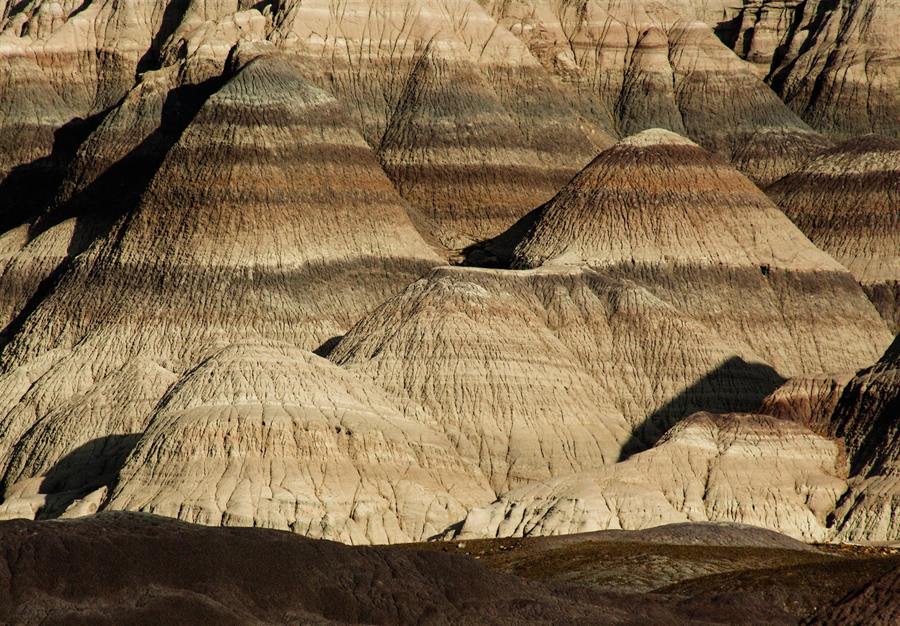
Wide-Open Desert Landscapes: Beyond its named landmarks, much of the Navajo Nation consists of expansive high-desert terrain — grassland, mesas, and open sky — that reflects the scale and diversity of the homeland as a whole, not just its most photographed corners.
Each of these places reflects a different facet of the Navajo Nation's geography and history, together illustrating just how varied this homeland truly is.
Respectful Travel on the Navajo Nation
Visitors to the Navajo Nation are guests on sovereign tribal land, governed by its own laws and customs. A respectful visit means understanding and honoring that context, not simply passing through it. The Navajo Nation welcomes tourism as a meaningful part of its economy, but on its own terms, shaped by its own regulations rather than assumptions visitors might bring from a national park or a nearby state.
- Respect Private Property — much of the Navajo Nation is home to families and working land, not open wilderness; stay only in areas designated for visitors.
- Follow Tribal Regulations — the Navajo Nation maintains its own permits, regulations, and, in many areas, its own hours and access rules, separate from state or federal park systems.
- Photography Etiquette — always ask before photographing people, homes, or ceremonies, and recognize that certain places and events are not intended for photography at all.
- Support Local Businesses and Artisans — purchasing directly from Navajo-owned businesses and artists ensures that tourism genuinely benefits the community you're visiting.
- Stay on Designated Public Areas — many parts of the Navajo Nation require a guide or permit to visit, including well-known sites like Antelope Canyon.
- Recognize Sovereign Land — the Navajo Nation is a sovereign nation with its own government and laws; visiting with that understanding, rather than treating it as simply another scenic stop, is the foundation of a respectful visit.
None of this is meant to discourage visitors — the Navajo Nation welcomes travelers who approach it with genuine curiosity and respect. It's simply a reminder that a meaningful visit here depends on recognizing whose land you're on, and traveling accordingly. Visitors who take this approach consistently report a richer, more meaningful experience than those who treat the Nation as simply a scenic drive between other destinations.
It's also worth noting that the Navajo Nation does not observe daylight saving time changes the same way as the rest of Arizona — since Arizona itself does not observe daylight saving time, but the Navajo Nation does, the practical result is that clocks on the reservation can differ from the surrounding state for part of the year, a detail worth double-checking before any visit that depends on precise timing.
The Navajo Nation Today
It's easy for outside accounts of Native nations to stop at history, as though the story ends somewhere in the past. The Navajo Nation today is an active, evolving community, engaged with the present as much as it honors its past, and any honest account of the Diné has to include both.
Modern education spans a network of tribal, public, and Bureau of Indian Education schools, alongside Diné College, a tribally controlled college offering higher education rooted in both academic and cultural curriculum. Navajo-owned businesses operate across retail, tourism, construction, and professional services, and contemporary Diné artists and jewelers continue to innovate within traditional forms, exhibiting and selling work recognized well beyond the reservation's borders.
The Navajo Nation has also increasingly invested in renewable energy initiatives, including solar and wind projects, reflecting both economic development goals and a broader shift away from historical reliance on coal and fossil fuel extraction, which for decades shaped a significant part of the reservation's economy and, at times, its environmental challenges. Community leadership continues through the elected Navajo Nation government, alongside chapter houses — roughly 110 local administrative units — that provide governance and services at the community level, closer to individual towns and communities than the central government in Window Rock, the Nation's capital.
Underlying all of this is a sustained, active commitment to cultural preservation — the continued importance of the Navajo language, ceremonial tradition, and clan relationships — carried forward not as historical reenactment, but as a living, evolving part of everyday life. That balance, between full participation in the modern world and sustained commitment to Diné tradition, is perhaps the clearest thread running through Navajo Nation life today.
Wildlife and Nature
The Navajo Nation's high desert supports a resilient mix of plant and animal life adapted to its elevation, aridity, and wide seasonal temperature swings. Juniper and pinyon pine dot the higher elevations, giving way to desert grasslands across much of the Nation's expansive open terrain. Golden eagles are a notable and culturally significant presence within Diné tradition, regarded with particular respect, along with mule deer, coyotes, and pronghorn moving across the grasslands and high desert plains.
Traditional Diné relationships with animals often carry meaning well beyond simple observation, reflected in stories, ceremonies, and cultural teachings that treat the natural world as an active, respected part of life rather than a passive resource. This landscape, much like the Diné relationship to it, rewards patient attention rather than a hurried glance.
For a closer look at the animals found throughout the wider region, see our full Arizona Wildlife → guide.
Why Understanding the Navajo Nation Enriches Every Visit to Northern Arizona
Whether someone visits the Grand Canyon, Monument Valley, Antelope Canyon, or the Painted Desert, understanding the history and culture of the Navajo Nation provides a deeper appreciation of the landscapes and the people who continue to call this region home.
It transforms the experience from simply seeing beautiful places to understanding the cultural heritage that gives those places meaning. A canyon becomes more than a photograph; a rock formation becomes more than a backdrop. Knowing that a valley is still home to Diné families, that a canyon floor is still farmed by the people who have farmed it for generations, or that a language nearly lost to history helped win a war — these details don't just add facts to a trip. They change what the trip is actually about.
Northern Arizona's landscapes and its Indigenous cultures are not separate subjects to learn about one after the other — they are, and always have been, part of the same continuous story.
Interesting Facts About the Navajo Nation
- The largest Native American reservation in the United States, by both land area and population.
- Spans portions of Arizona, New Mexico, and Utah, across the Four Corners region.
- The Navajo Nation has its own government, laws, and court system, functioning as a sovereign nation.
- The Navajo language played a vital role during World War II through the Navajo Code Talkers, whose code was never broken.
- Home to some of the Southwest's most iconic landscapes, including Monument Valley, Canyon de Chelly, and Antelope Canyon.
Frequently Asked Questions
What is the Navajo Nation?
The Navajo Nation is the largest Native American reservation in the United States, a sovereign tribal nation with its own government, spanning parts of Arizona, New Mexico, and Utah, and home to the Diné people.
Why do many Navajo people call themselves Diné?
Diné means "The People" and is the name the Navajo have long used for themselves, distinct from "Navajo," the name more commonly used in English and historical records, believed to originate from outside sources rather than the Diné themselves.
How large is the Navajo Nation?
The Navajo Nation spans millions of acres across three states, making it the largest reservation in the country by land area, though still only a portion of the traditional Diné homeland.
Is the Navajo Nation a sovereign nation?
Yes. The Navajo Nation has its own government, including an elected president and tribal council, along with its own laws, courts, and police department, functioning with a significant degree of self-governance.
What language do the Navajo people speak?
The Navajo language, Diné bizaad, is one of the most widely spoken Indigenous languages in the United States and remains central to cultural identity and ceremony, though the number of fluent speakers has declined in recent generations.
What are traditional Navajo arts?
Weaving, silversmithing and jewelry making, ceremonial traditions such as sandpainting, and oral storytelling are among the Navajo Nation's most significant traditional art forms, each carrying meaning well beyond decoration.
Why is the Navajo Nation culturally important?
It represents a living, continuing Indigenous culture with deep historical roots, a distinct language, and enduring traditions that continue to shape both its own community and the broader identity of the American Southwest.
How can visitors respectfully experience Navajo lands?
By following tribal regulations, respecting private property and photography etiquette, supporting Navajo-owned businesses, and recognizing that the Navajo Nation is sovereign land deserving the same respect given to any host nation, not simply a scenic backdrop.
Continue Exploring Arizona
The Navajo Nation connects to many of Northern Arizona's most remarkable landscapes. Here's where to go next:
Monument Valley
Towering sandstone buttes on Navajo Nation land.
READ GUIDE →Antelope Canyon
A glowing slot canyon carved from Navajo sandstone.
READ GUIDE →Grand Canyon National Park
The centerpiece of Arizona's geological and cultural story.
READ GUIDE →Arizona Native American Arts & Culture
Pottery, weaving, jewelry, and artwork across the Southwest.
READ GUIDE →Hopi Cultural Heritage
Mesa-top villages among the oldest in North America.
READ GUIDE →
Experience Northern Arizona with Respect and Local Knowledge
Northern Arizona's landscapes are inseparable from the cultures that have called this region home for generations. Learning about the Navajo Nation adds depth and meaning to any visit, helping travelers better appreciate the history, traditions, and people who continue to shape this remarkable part of the American Southwest. At Grand Canyon Journeys, we believe the best travel experiences begin with respect, curiosity, and a genuine appreciation for the places and communities we visit.