Introduction
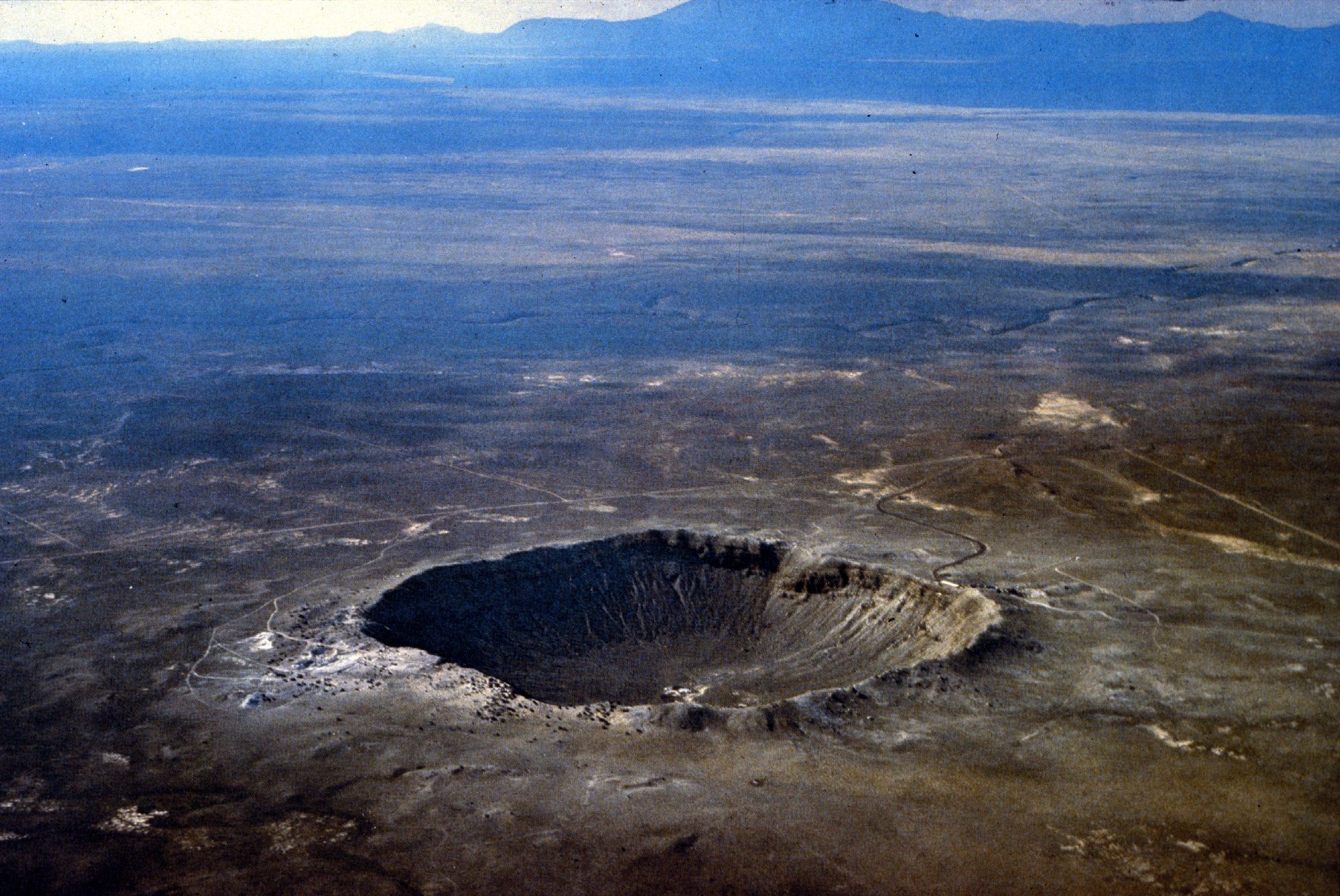
Meteor Crater is one of Arizona's most fascinating natural attractions and one of the world's best-preserved meteorite impact sites. Nearly a mile wide and roughly 550 feet deep, this dramatic bowl in the high desert was carved approximately 50,000 years ago when an iron-nickel meteorite slammed into the Colorado Plateau at tens of thousands of miles per hour. Unlike most of Earth's impact craters, which have been softened or erased by weather, vegetation, and geologic time, Meteor Crater's rim and structure remain remarkably crisp — a rare, almost otherworldly window into a single catastrophic moment in the region's deep history.
The crater sits conveniently just off Interstate 40, roughly midway between Flagstaff and Winslow, making it an easy and worthwhile stop for travelers exploring Northern Arizona or heading to and from the Grand Canyon. Whether you're drawn by the geology, the astronomy, the history of the Barringer family's decades-long mining obsession, or the site's surprising role in training NASA's Apollo astronauts, Meteor Crater rewards even a short visit with a landscape unlike anywhere else in the state.
What is Meteor Crater?
Meteor Crater, also known as Barringer Crater, is the result of an asteroid impact — the collision of a solid iron-nickel meteorite with the Earth's surface at extraordinary speed. Scientists estimate the impact occurred approximately 50,000 years ago, during the late Pleistocene, when the surrounding high desert would have looked considerably different from the arid landscape visitors see today.
The crater itself is nearly one mile across (roughly 3,900 feet in diameter) and about 550 feet deep, with a rim that rises some 150 feet above the surrounding plain. For comparison, the crater is large enough that 20 football fields could fit inside it, and its rim is high enough to hide much of a modern high-rise building. Despite its size, the meteorite responsible for it was relatively small — estimated at only about 160 feet across — a reminder of how much kinetic energy even a modest-sized object carries at cosmic speeds.
What makes Meteor Crater scientifically important is its exceptional state of preservation. Because it formed in a dry climate with limited erosion, minimal vegetation, and geologically recent timing, the crater has retained its bowl shape, raised rim, and surrounding ejecta blanket far better than older or wetter-climate impact sites elsewhere on Earth. That preservation is precisely why Meteor Crater became the first proven impact crater on the planet and why it remains a benchmark site for impact-cratering science today. In recognition of its significance, the site was designated a National Natural Landmark in 1967.
Where is Meteor Crater Located?
Meteor Crater sits in the Arizona high desert on the Colorado Plateau, just south of Interstate 40, roughly 37 miles east of Flagstaff and 18 miles west of Winslow. A dedicated exit and access road lead directly from I-40 to the Visitor Center, making it one of the more convenient natural landmarks to reach anywhere in Northern Arizona — no unpaved roads or long detours required.
| Starting Point | Approx. Driving Time |
|---|
| Flagstaff | 35–40 minutes |
| Sedona | 1 hour 15 minutes |
| Williams | 1 hour |
| Grand Canyon South Rim | 1 hour 30 minutes |
| Page | 2 hours 30 minutes |
| Phoenix | 2 hours 45 minutes |
Because it sits directly along I-40, Meteor Crater fits naturally into a wider Northern Arizona road trip — an easy addition on the way to or from Flagstaff, Winslow, the Petrified Forest, or the Grand Canyon, without requiring a dedicated day of its own.
History of Meteor Crater
For centuries, the crater's origin was a genuine mystery. Early scientific visitors in the late 1800s largely assumed it was the result of volcanic activity, a reasonable guess given the volcanic fields scattered across Northern Arizona, including nearby Sunset Crater.
Daniel Barringer and the Mining Years
That assumption changed with Daniel Barringer, a mining engineer and businessman who became convinced, beginning in 1903, that the crater was formed by a meteorite impact — and, crucially, that a massive iron meteorite mass worth a fortune might still be buried beneath the crater floor. Barringer acquired mining claims to the site and, through his Standard Iron Company, spent nearly three decades and a considerable personal fortune drilling and excavating in search of that buried metal.
The mining effort never found the large intact meteorite Barringer expected. Modern science now understands why: most of the original meteorite vaporized or fragmented into small pieces on impact, scattered across the surrounding desert rather than remaining as one buried mass. Barringer died in 1929 without finding his fortune, but his advocacy for the crater's impact origin — pursued against the skepticism of much of the scientific establishment of his day — proved to be his most lasting legacy.
Proving the Impact Origin
Confirming Barringer's impact theory took decades more research. It was ultimately geologist Eugene Shoemaker, working in the late 1950s and early 1960s, who provided definitive proof, identifying shock-metamorphic minerals — including coesite, a form of quartz that forms only under the extreme pressures of an impact or nuclear blast — within the crater's rock. Shoemaker's work didn't just settle the debate over Meteor Crater; it helped establish impact cratering as a legitimate field of planetary science and provided tools later used to identify impact craters across the solar system.
National Natural Landmark
In recognition of its geological and scientific significance, Meteor Crater was designated a National Natural Landmark in 1967. Unlike most landmarks of its stature, the crater remains privately owned today by Meteor Crater Enterprises, a company connected to the Barringer family, which operates the Visitor Center and observation facilities that welcome guests to the rim.
The Science Behind the Impact
The meteorite responsible for Meteor Crater is estimated to have been roughly 160 feet across and composed largely of iron and nickel — a solid metallic mass rather than the loosely bound rock and ice of many comets. Scientists estimate it struck the Earth at a speed of roughly 26,000 miles per hour (about 12 kilometers per second), releasing kinetic energy on impact equivalent to several million tons of TNT — comparable to a large nuclear detonation.
That explosive release of energy excavated the crater almost instantaneously, throwing enormous volumes of shattered and pulverized rock outward and upward. Some of that ejected material fell back to form the raised rim that still surrounds the crater today, while the shock wave generated by the impact fractured and overturned rock layers well beyond the crater's edge, producing the distinctive "ejecta blanket" of hummocky, jumbled terrain visible around the crater's perimeter.
Perhaps the most common question visitors ask is why no large piece of the meteorite was ever found intact. The answer lies in the impact physics itself: an object striking at such extreme velocity is subjected to tremendous heat and pressure, causing much of it to vaporize, melt, or shatter into countless small fragments on impact, rather than surviving as a single buried mass. Numerous small fragments of the original meteorite — known as the Canyon Diablo meteorite, named for a nearby wash — have been found scattered across the surrounding desert, including the Holsinger Meteorite, the largest known fragment, now on display at the Discovery Center.
Visiting Meteor Crater Today
Today, Meteor Crater welcomes visitors through a modern Visitor Center perched directly on the crater's rim, offering some of the most dramatic views available anywhere along Interstate 40. Multiple outdoor observation decks let visitors look directly down into the crater's bowl from several angles, each offering a slightly different sense of its scale and depth.
Inside, the Discovery Center houses interactive exhibits exploring the science of impact cratering, meteorites, and space exploration, alongside a theater showing a short film about the crater's formation and history. A large meteorite fragment — the Holsinger Meteorite, weighing roughly 1,400 pounds — is on permanent display, giving visitors a tangible sense of the object responsible for such an outsized geological event. A gift shop and on-site restaurant round out the Visitor Center facilities, making it comfortable to spend an hour or more without needing to leave the site.
For visitors who want a closer, more active experience, guided Rim Tours are available, led by staff who walk small groups along a portion of the crater's rim with added interpretation not covered from the standard observation decks.
Can You Walk Into Meteor Crater?
No — public hiking down into the crater itself is not permitted. This surprises some first-time visitors, especially those used to the Grand Canyon's extensive trail network, but the restriction makes sense on two levels. First, Meteor Crater is privately owned, and access is managed entirely by Meteor Crater Enterprises rather than a public land agency. Second, the crater floor and structure remain scientifically important, and unrestricted foot traffic could damage a site that has stayed remarkably well preserved precisely because it hasn't been extensively disturbed.
Visitors who want a more immersive experience than the rim observation decks offer can join one of the guided Rim Tours, which provide closer access and additional interpretation under staff supervision — the closest sanctioned way to experience the crater beyond looking down from above.
Best Time to Visit
Spring
Spring generally brings mild daytime temperatures and comfortable conditions for time spent outdoors on the observation decks, though wind can pick up considerably across this exposed high-desert terrain.
Summer
Summer brings intense midday heat with little natural shade along the rim, so an early-morning or late-afternoon visit is considerably more comfortable than the middle of the day. Afternoon monsoon storms can also build quickly during this season.
Fall
Fall typically offers some of the most pleasant conditions of the year — cooler temperatures, clearer skies, and generally calmer weather than the volatile summer monsoon months.
Winter
Winter brings cold mornings and, occasionally, snow dusting the crater rim, which can make for a striking, uncommon photograph but also means checking road and weather conditions before setting out.
Morning and late-afternoon light generally produce the most dramatic photography conditions, throwing long shadows across the crater's interior that reveal its scale and texture far better than the flatter light of midday. Because the site sits fully exposed on the open desert plain, wind is a near-constant consideration on the observation decks regardless of season.
Wildlife Around Meteor Crater
The high-desert terrain surrounding Meteor Crater supports a resilient community of wildlife adapted to this arid, exposed environment. Coyotes and jackrabbits are commonly spotted moving across the open plain, while prairie dogs occupy burrow colonies scattered through the surrounding grassland. Overhead, ravens are a near-constant presence, and golden eagles are sometimes seen riding thermals above the crater and the surrounding desert.
Numerous reptile species inhabit the area as well, well suited to the intense heat and limited water typical of this stretch of the Colorado Plateau. The sparse but resilient desert plants surrounding the crater — hardy grasses, scattered shrubs, and drought-adapted vegetation — form the base of a genuine high-desert ecosystem, even in a landscape that can look barren at first glance. For a closer look at the animals found throughout the wider region, see our Arizona Wildlife → guide.
Geology of Meteor Crater
Meteor Crater sits atop the Colorado Plateau, a broad, geologically stable region of layered sedimentary rock that underlies much of Northern Arizona, including the Grand Canyon itself. The rock exposed in and around the crater's walls consists primarily of flat-lying limestone and sandstone layers, deposited long before the impact occurred, during periods when shallow seas and ancient river systems periodically covered this part of the continent.
The impact itself dramatically disrupted these otherwise orderly rock layers. Near the crater's rim, the explosive force of the impact overturned and folded sedimentary layers that had been perfectly flat for hundreds of millions of years, flipping sections of rock nearly upside down in places — a striking, visible reminder of just how much force was involved. Beyond the rim, the impact deposited a layer of ejecta: pulverized and shattered rock thrown outward by the explosion, now forming the hummocky, uneven terrain that surrounds the crater on all sides.
Shock Metamorphism
Within the crater's rock, geologists have identified shock-metamorphic features — distinctive mineral and structural changes that occur only under the extreme, near-instantaneous pressures generated by a high-velocity impact. These features, including the mineral coesite identified by Eugene Shoemaker, are what ultimately proved the crater's impact origin beyond doubt, and they remain a key diagnostic tool used to identify impact sites elsewhere on Earth and across the solar system.
Erosion and Preservation
Meteor Crater's excellent preservation comes down to a combination of favorable factors: a young geological age (roughly 50,000 years, remarkably recent by geological standards), a dry desert climate that limits erosion by water, and sparse vegetation that leaves the crater's structure largely exposed rather than gradually buried under soil and plant growth. Older impact craters elsewhere on Earth, particularly those in wetter or more tectonically active regions, have often been eroded, buried, or deformed almost beyond recognition — which is precisely what makes Meteor Crater such a valuable natural laboratory. It offers scientists an unusually clear, almost freshly formed example of impact geology, still legible tens of thousands of years after the event that created it.
For more on the deeper rock record behind this region's landscapes, see our Arizona Geology →, Grand Canyon Geology Guide →, and Colorado Plateau → guides.
NASA and Apollo Astronaut Training
Because Meteor Crater's structure and impact-formed terrain so closely resemble craters found on the Moon, NASA selected the site during the 1960s as a training ground for Apollo astronauts preparing for lunar missions. Astronauts studied the crater's geology firsthand, learning to identify impact-related rock formations and terrain features they would later encounter — and need to correctly interpret — on the lunar surface itself.
This training reflected a broader scientific insight: impact cratering is one of the dominant geological processes shaping the Moon's surface, and Meteor Crater offered NASA a rare, accessible, Earth-based analog for that lunar terrain. The crater's connection to the space program is still commemorated today at the Visitor Center's Astronaut Wall of Fame, honoring the Apollo-era astronauts who trained on its rim and floor before venturing to the Moon itself — a tangible link between this stretch of Arizona desert and humanity's first steps on another world.
Photography Guide
The crater's outdoor observation decks offer several distinct vantage points, each capturing a slightly different angle and sense of scale — it's worth spending time at more than one rather than stopping at the first view you reach. Morning light tends to rake across the crater's interior at a low angle, throwing shadows that reveal texture and depth far better than the flatter light of midday.
Golden hour, in the hour or so before sunset, similarly brings out warm tones in the surrounding rock and can produce especially dramatic photographs of the crater's rim silhouetted against the sky. Winter photography offers its own reward on the rare occasions when snow dusts the rim, creating striking contrast against the crater's typically warm, arid palette.
A moderate zoom or wide-angle lens both have their uses here — wide angle captures the crater's overwhelming scale from the rim, while a longer lens can compress and isolate details on the far crater wall. Drone flights are not permitted at Meteor Crater, since it is private property with restricted airspace considerations near an operating visitor facility, so photographers should plan around ground-based shots only. The site's remote, high-desert location and minimal light pollution also make it a promising spot for night sky photography, for travelers combining a visit with other Northern Arizona stargazing plans. See our Arizona Photography → guide for more region-wide tips.
Family Guide
Meteor Crater makes for an engaging, relatively low-effort family stop, especially compared to more physically demanding Grand Canyon hikes. The Discovery Center's interactive exhibits, short film, and large meteorite display tend to hold children's attention well, translating abstract geology and astronomy concepts into something tangible and visual.
The main observation decks and Visitor Center are paved and accessible, making the site stroller-friendly and workable for visitors using wheelchairs, though guided Rim Tours involve additional walking and uneven terrain that may not suit every visitor. On-site food service and restrooms mean families don't need to plan meals or bathroom breaks around the visit, and most families find that one to two hours is enough time to see the exhibits, take in the rim views, and browse the gift shop without feeling rushed.
Nearby Attractions
Meteor Crater sits within easy reach of several other significant Northern Arizona destinations, making it easy to combine with a wider day of exploring.
Flagstaff
The high-country hub for exploring Northern Arizona, roughly 35–40 minutes away.
READ GUIDE →Walnut Canyon
Ancestral Puebloan cliff dwellings tucked into a wooded limestone canyon.
READ GUIDE →Sunset Crater Volcano
A young cinder cone volcano and lava field north of Flagstaff.
READ GUIDE →Wupatki National Monument
Ancestral Puebloan pueblos on the open Colorado Plateau.
READ GUIDE →Painted Desert
Vividly banded badlands stretching across northeastern Arizona.
READ GUIDE →Petrified Forest National Park
Fossilized wood and badlands spanning 200 million years.
READ GUIDE →Route 66 Arizona
The historic highway running through Winslow and Flagstaff nearby.
READ GUIDE →Grand Canyon National Park
The centerpiece of any Northern Arizona itinerary.
READ GUIDE →
Suggested Itineraries
Half Day: Meteor Crater + Winslow
Visit the crater in the morning or early afternoon, then continue 18 miles east to Winslow for a stop along historic Route 66 before heading back to your base for the evening.
One Day Options
Meteor Crater pairs naturally with any one of several nearby stops for a full day of Northern Arizona exploring: combine it with Walnut Canyon's cliff dwellings, spend the afternoon in Flagstaff, continue east to Petrified Forest National Park, or extend the drive to take in the Painted Desert's colorful badlands.
Two Day: Meteor Crater + Grand Canyon
Visit Meteor Crater on your way toward or away from the Grand Canyon, splitting the drive across Interstate 40 and Highway 64 into a comfortable two-day loop through the region's most iconic landscapes.
Frequently Asked Questions
How old is Meteor Crater?
Meteor Crater formed approximately 50,000 years ago when an iron-nickel meteorite struck the Colorado Plateau at high speed.
How large is Meteor Crater?
The crater is nearly one mile (about 4,000 feet) across and roughly 550 feet deep, with a rim that rises about 150 feet above the surrounding desert plain.
How long should I spend there?
Most visitors spend one to two hours exploring the Visitor Center, Discovery Center exhibits, and rim observation decks.
Can you hike inside the crater?
No. Meteor Crater is privately owned and public hiking into the crater is not permitted, in order to preserve the site for ongoing scientific research; limited guided rim tours are available instead.
Is Meteor Crater privately owned?
Yes. Unlike most of Arizona's natural landmarks, Meteor Crater is privately owned by Meteor Crater Enterprises, a descendant company of the Barringer family.
Is Meteor Crater worth visiting?
Yes — it's one of the best-preserved meteorite impact sites on Earth, easily reached from Interstate 40, and pairs naturally with a Flagstaff or Grand Canyon itinerary.
How much does admission cost?
Meteor Crater charges a separate admission fee set by its private owner. It is not a National Park Service site, so America the Beautiful passes are not accepted — check the official Visitor Center site for current pricing.
Is Meteor Crater suitable for children?
Yes — the Discovery Center's interactive exhibits, theater, and large meteorite display are engaging for kids, and the paved observation decks are stroller- and wheelchair-accessible.
Can dogs visit?
Leashed pets are generally permitted in outdoor areas, but check current pet policies directly with the Visitor Center before your visit, since indoor exhibits and guided rim tours may restrict animals.
When is the best time to visit?
Spring and fall offer the mildest temperatures, while early morning and late afternoon provide the softest light for photography and cooler conditions on the outdoor observation decks.
Why Visit Meteor Crater?
Meteor Crater endures as a world-famous geological landmark precisely because so few places on Earth preserve the direct evidence of a cosmic impact so clearly. It carries genuine scientific significance as the site where impact cratering was first proven, a unique family attraction with hands-on exhibits and dramatic rim views, and one of the easiest stops to reach along Interstate 40. Combined naturally with Flagstaff, Walnut Canyon, or a wider Grand Canyon itinerary, Meteor Crater stands as one of Northern Arizona's most remarkable — and most convenient — natural wonders.
Continue Exploring Northern Arizona
Meteor Crater is one of the most remarkable natural landmarks in Arizona and pairs perfectly with a visit to Flagstaff, Walnut Canyon, or the Grand Canyon. If you'd like to experience Northern Arizona without the stress of planning, Grand Canyon Journeys offers private luxury tours featuring expert local guides, scenic routes, and personalized itineraries throughout the region. Start planning with our full Grand Canyon Travel Planner →.